


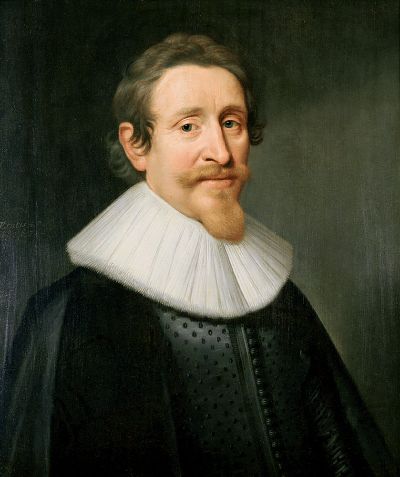
Hugo Grotius (Huig de Groot) was born in Delft, in the province of Holland, on 10 April 1583. A child prodigy, diplomat, advocate, official, scholar and teacher, he was above all a jurist. As counsel to the Dutch East India Company he wrote De jure praedae, one chapter of which was published as Mare liberum (1609), the classic statement of the freedom of the seas.
After the Calvinist coup of 1618 he was arrested together with his patron Johan van Oldenbarnevelt and sentenced to life imprisonment. In 1621, with the help of his wife, he escaped hidden in a book chest and fled to Paris, to the court of Louis XIII.
His principal work, De jure belli ac pacis (On the Law of War and Peace), appeared in 1625. More than a treatise on the law of nations, it offers a comprehensive legal analysis of law and government, grounding law in human nature and in the social interests of humankind.
From 1634 he served as Swedish ambassador in Paris and took part in the preparations for the treaties that ended the Thirty Years’ War. Shipwrecked in the Baltic on his way to Stockholm, he died of exhaustion in Rostock on 28 August 1645. His last words are said to have been: “By understanding many things, I have accomplished nothing.”
Why Grotius?
Grotius shaped not only legal and political thought for centuries to come, but was also an active participant in the politics of his age, in Holland and in wider European affairs. His name stands for what this journal aims to serve: understanding international relations through law, history and politics.